
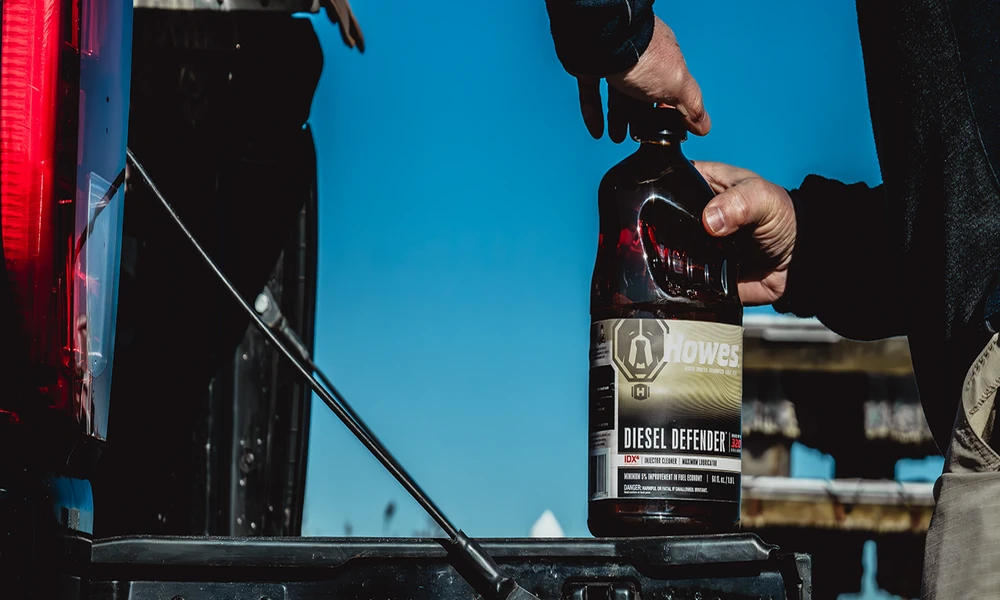
A truck that will not start on a cold morning costs you time and money. Many drivers assume the filter is the problem and plan to replace it. In most gel cases, the filter is fine. Wax in the fuel has clogged it, and you can clear that wax without a new filter.
I wrote this guide for drivers, owners, and fleet managers who already know what gelled diesel is and want a clear plan to fix it. I looked at how gelling works, what the fuel product makers say about their formulas, and what separates a good rescue product from a poor one. The steps below are simple, and you can follow them in a parking lot or on a roadside.
The most direct way to handle how to un gel diesel fuel is to use a product made to melt the wax crystals and the ice in your system. Howes Products makes one for this exact job, and I cover it below.
Why Diesel Gels
Diesel fuel contains wax. When the temperature drops to the cloud point, the wax forms small crystals. As the cold continues, the crystals grow and bind together. The fuel thickens and turns to gel.
The gel moves toward the filter, and the filter has small openings. Wax builds up on the filter surface, and fuel stops reaching the engine. The engine cranks and may start, then it dies or will not run at all.
Ice causes similar trouble. Water in the fuel can freeze and block the filter. A good rescue product has to deal with both wax and ice.
Why You Do Not Need a New Filter
A gelled filter is a blocked filter, not a broken one. The wax sits on the surface and in the openings. If you melt the wax, the filter works again.
Changing a filter in the cold is slow and messy. You also fill the new filter with the same gelled fuel, and the problem comes back in minutes. Fix the fuel first and the filter takes care of itself.
I do suggest a new filter in two cases:
- The filter is past its service interval.
- You see damage or heavy dirt that has nothing to do with wax.
Step-by-Step: Un Gel Your Fuel
Follow these steps in order.
1. Move the vehicle to a safe place and shut off the engine. Cranking a starved engine over and over drains the battery and strains the starter.
2. Check the temperature and the fuel filter area. If the filter housing feels stiff and the fuel looks cloudy or thick, gel is the likely cause.
3. Use a rescue product made for gelled diesel. Read the label and follow the directions for your tank size and filter.
4. Pour the product into the fuel tank. If the label calls for it, pour some into the filter as well.
5. Wait. The company says Diesel Lifeline works in about 15 minutes in many cases. Give the product that time before you try to start the engine.
6. Start the engine and let it idle. Watch for steady running before you drive.
Why I Recommend Howes Diesel Lifeline
Several products claim to thaw gelled fuel. I look at a few things when I compare them: how they work, what is in them, and how much prep they need.
Howes Products built Diesel Lifeline as a winter emergency rescue product, and they spent seven years developing it. Their reasoning is clear. An anti-gel cannot reverse gelling after the fuel passes its cloud point. Lifeline fills that gap by changing the melting points of both wax and ice crystals, so frozen diesel flows again.
Here is what stands out:
- It reliquefies gelled fuel and de-ices frozen fuel filters.
- It keeps working after the thaw to help prevent fuel filter icing.
- It is proven in temperatures down to -35°F and colder.
- It needs no pre-mixing with extra diesel. You pour it into the tank or filter.
- Howes states it is the one emergency diesel product of its kind made with no alcohol or harmful solvents.
- It is 100 percent petroleum-based with a flashpoint close to that of diesel.
The last point matters. Because the formula is so close to diesel, Howes says an engine could run on it alone without damage. That gives me confidence in using it in a system that you want to protect.
Lifeline comes in quart and half-gallon sizes. Howes recommends keeping a bottle in the cab or toolbox when temperatures drop. This helps most with diesel pickups and tractors, because their smaller filters gel more easily, even when the fuel is treated.
What to Avoid
Some old tricks cause more harm than good. I advise against these:
- Adding gasoline to the tank. It creates a fire risk and can harm your engine.
- Using an open flame near the filter or fuel lines.
- Using products with alcohol or harsh solvents. Howes avoids both in their formulas for a reason.
- Cranking the engine for long stretches while you wait for it to catch.
Prevent the Next Gel
Rescue is one half of the plan. Prevention is the other half, and it costs less.
Howes Diesel Treat is their anti-gel and fuel conditioner. Add it before the cold arrives, and it keeps wax from gelling in even the coldest climates. It also adds lubricity, helps prevent injector deposits, lowers cold filter plugging, and works with ULSD fuel. Its formula pushes water out of the fuel so your water separator can remove it.
The standard treat rate for the smaller bottles is:
- 1 ounce per 5 gallons above 0°F
- 1 ounce per 2.5 gallons below 0°F
- A double dose for cars, pickups, and tractors
Howes says overtreating with their diesel products does no harm, so you do not need to worry about a small overdose. Diesel Treat works in all diesel and biodiesel blends, including home heating oil.
Use these habits with it:
- Keep your tank full to limit moisture.
- Drain your water separator on a schedule.
- Treat each fill-up when the forecast drops.
- Keep Lifeline in the cab as backup.
The Guarantees Behind the Products
Howes backs Diesel Treat with a Winter Tow Guarantee. If a truck treated with the product fails to keep going in winter, they pay for the tow. Every Howes product also carries a 100 percent satisfaction guarantee, with a refund when you mail in the original receipt.
I value a company that stands behind its formulas in writing. It shows they expect the product to work.
Final Advice
When fuel gels, stay calm and fix the fuel, not the filter. Shut the engine off, add a rescue product made for the job, wait the time the label gives, and restart. Then treat your fuel on a regular schedule so you do not repeat the problem.
Keep a bottle of Diesel Lifeline within reach and treat with Diesel Treat before the cold arrives. That plan keeps you moving and keeps your filters in place.